


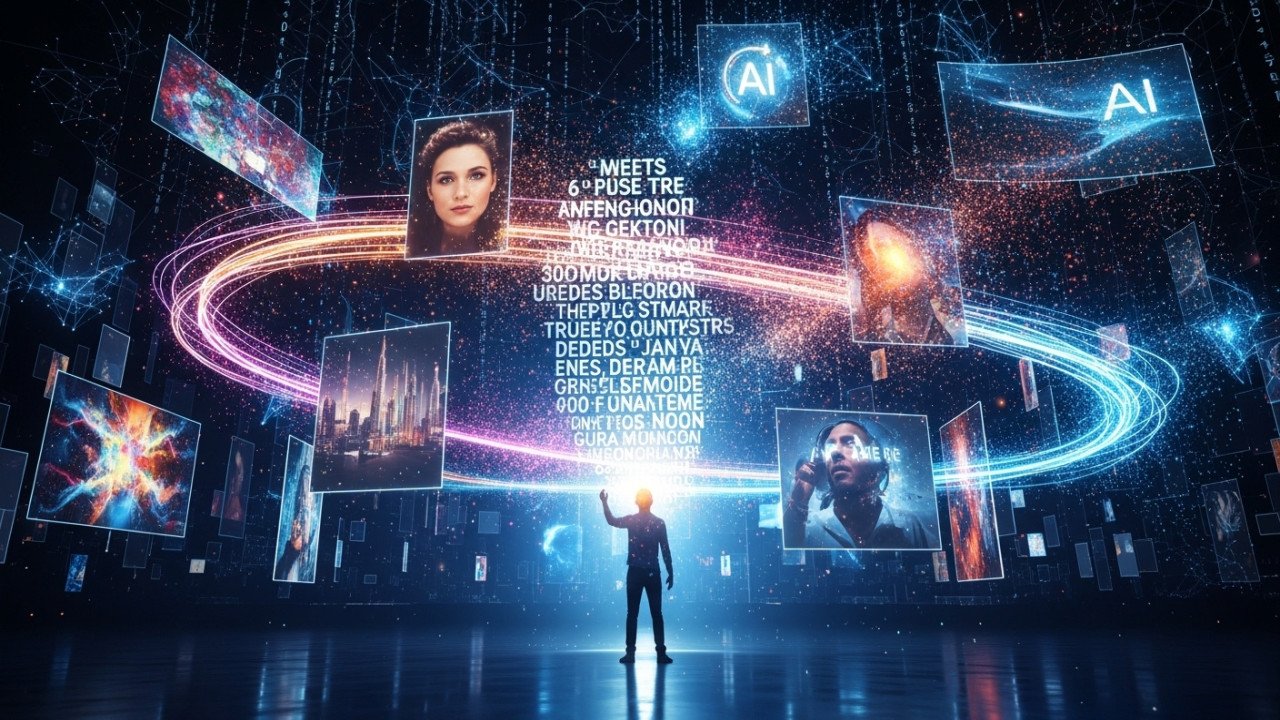
Text-to-Image AI Revolution: Transforming Digital Creativity in 2025
Text-to-Image Revolution: How AI is Transforming Digital Creativity
The digital creative landscape has undergone a seismic shift with the emergence of text-to-image artificial intelligence technology. What once required years of artistic training, expensive software, and considerable technical expertise can now be accomplished by anyone with imagination and the ability to describe their vision in words.
This revolutionary transformation extends far beyond simple convenience, fundamentally altering how we conceptualize, create, and consume visual content across every industry and creative discipline. From marketing agencies and educational institutions to independent artists and global corporations, text-to-image AI is reshaping creative workflows and democratizing access to professional-quality visual content.
Understanding this transformation is crucial for anyone involved in creative work, whether you're adapting existing processes or exploring entirely new possibilities that weren't conceivable just a few years ago. The implications reach into every corner of digital creativity, promising both unprecedented opportunities and significant challenges for creative professionals worldwide.
The Genesis of Text-to-Image Technology
From Concept to Reality
The journey toward text-to-image generation began decades ago with early computer graphics research, but recent breakthroughs in machine learning have transformed theoretical possibilities into practical tools that millions of people use daily.
Early AI systems could barely recognize simple objects in images, let alone create them. The development of generative adversarial networks (GANs) and later diffusion models provided the technological foundation that makes today's sophisticated text-to-image generation possible.
The release of DALL-E in 2021 marked a pivotal moment when text-to-image generation transitioned from research laboratories to mainstream awareness, demonstrating capabilities that seemed almost magical to observers unfamiliar with AI development.
Technological Breakthroughs
Modern text-to-image systems leverage transformer architectures originally developed for natural language processing, combining them with advanced image generation techniques to bridge the gap between textual description and visual representation.
Training these systems requires enormous datasets containing millions of images paired with descriptive text, allowing AI models to learn complex relationships between language and visual concepts across countless examples.
The computational power required for both training and running these models has decreased dramatically, making sophisticated AI image generation accessible through web browsers and mobile applications rather than requiring specialized hardware.
Democratization of Visual Creation
Breaking Down Barriers to Entry
Traditional digital art creation required substantial investments in software, hardware, and education that prevented many people from pursuing creative projects or professional opportunities in visual design and illustration.
Text-to-image AI eliminates most technical barriers, allowing anyone to create professional-quality visuals by simply describing their ideas in natural language. This accessibility has opened creative opportunities for people who never considered themselves artistic.
Small businesses, independent creators, and individuals in developing regions can now produce marketing materials, illustrations, and creative content that compete with work from well-funded design agencies and established creative professionals.
Empowering Non-Artists
People without artistic training can now contribute meaningfully to creative projects, bringing domain expertise from other fields to visual content creation without requiring artistic skills or extensive design education.
Subject matter experts in fields like science, medicine, education, and technology can create accurate illustrations and diagrams that support their professional work without relying on external creative services.
This democratization has led to more diverse voices and perspectives in visual content, as barriers that previously limited creative participation have been significantly reduced or eliminated entirely.
Expanding Creative Possibilities
Text-to-image AI enables exploration of visual concepts that might be too expensive, time-consuming, or technically challenging to create through traditional methods, expanding the realm of practical creative possibilities.
Rapid iteration and experimentation become feasible when generation costs approach zero, encouraging more adventurous creative exploration and risk-taking in visual design and artistic development.
The speed of AI generation allows creators to explore dozens of variations and approaches within minutes, facilitating creative processes that were previously impractical due to time and resource constraints.
Impact on Creative Industries
Advertising and Marketing Transformation
Marketing agencies are revolutionizing campaign development by using AI-generated imagery for rapid prototyping, concept testing, and personalized content creation at scales previously impossible with traditional photography and illustration.
Brand campaigns can now feature hundreds of unique variations tailored to different demographics, regions, or platforms without proportional increases in production costs or timelines.
Small marketing teams can produce visual content volumes that previously required large creative departments, leveling the competitive landscape between agencies of vastly different sizes and budgets.
Editorial and Publishing Evolution
Publishers and media organizations use AI-generated imagery to create custom illustrations for articles, reducing dependence on stock photography and enabling more specific visual content that perfectly matches editorial needs.
Book publishers can generate custom cover art and internal illustrations at lower costs, making illustrated books more economically viable for niche topics and smaller publications.
News organizations can create visual representations of breaking news events, abstract concepts, or scenarios where traditional photography isn't available or appropriate.
Entertainment Industry Innovation
Game developers use AI-generated artwork for concept art, texture creation, and asset generation, accelerating development timelines and reducing costs for indie developers and large studios alike.
Film and television productions leverage AI imagery for storyboarding, set design visualization, and promotional materials, streamlining pre-production processes and enabling more ambitious creative visions.
Independent creators can produce high-quality visual content for social media, streaming platforms, and digital distribution without significant budget requirements or large creative teams.
Educational Content Revolution
Educational institutions create custom illustrations, diagrams, and visual aids that perfectly match curriculum requirements without relying on generic stock imagery or expensive commissioned artwork.
Online course creators can generate specific visual examples, cultural representations, and contextual imagery that make educational content more engaging and culturally relevant for diverse audiences.
Textbook publishers can update visual content more frequently and cost-effectively, ensuring educational materials remain current with evolving knowledge and changing social contexts.
Transforming Creative Workflows
Rapid Prototyping and Ideation
Creative teams now use AI image generation for rapid visual brainstorming, creating dozens of concept variations within hours rather than the days or weeks required for traditional concept development.
Client presentations can include sophisticated visual mockups and examples that help communicate ideas more effectively than verbal descriptions or rough sketches alone.
Design agencies can explore more creative directions within project budgets, as the cost of generating alternative concepts approaches zero compared to traditional illustration and photography.
Collaborative Creative Processes
Text-to-image AI enables new forms of collaboration where team members with different skills can contribute to visual projects by describing their ideas clearly, rather than requiring artistic implementation abilities.
Remote teams can share visual concepts instantly through AI generation, facilitating creative collaboration across geographic boundaries and time zones without requiring specialized creative software or skills.
Cross-functional teams incorporating marketing, technical, and creative perspectives can participate more equally in visual content development when artistic execution skills aren't required for contribution.
Iterative Design Enhancement
Designers use AI generation as a starting point for creative work, generating initial concepts that can be refined, combined, or modified using traditional design tools and techniques.
The ability to generate unlimited variations enables thorough exploration of creative possibilities before committing to final directions, improving overall creative outcomes through comprehensive option evaluation.
Client feedback can be incorporated more readily when generating new variations costs virtually nothing compared to traditional revision processes that require significant time and labor investments.
Economic Implications for Creatives
Shifting Value Propositions
Professional artists and designers are adapting by focusing on higher-level creative services like art direction, concept development, and creative strategy rather than pure execution of visual content.
The value of human creativity increasingly lies in understanding context, emotional intelligence, and strategic thinking rather than technical implementation skills that AI can now replicate effectively.
Creative professionals who embrace AI tools as creative partners often find their productivity and creative output capabilities enhanced significantly, allowing them to take on more ambitious projects and serve more clients.
New Revenue Opportunities
AI-generated artwork has created new markets for digital art, NFTs, and custom content creation that didn't exist before these tools became accessible to general users.
Creative professionals can offer AI-assisted services at lower price points while maintaining profitability through increased efficiency and reduced time requirements for project completion.
New hybrid services combining human creativity with AI capabilities enable creative professionals to serve clients who previously couldn't afford custom creative work due to budget constraints.
Market Disruption and Adaptation
Stock photography markets face significant pressure as AI-generated imagery provides unlimited unique alternatives to traditional stock photo licensing models.
Illustration markets are experiencing fundamental changes as clients can generate custom artwork instantly rather than commissioning traditional illustration services for many applications.
Creative professionals who successfully integrate AI tools into their workflows often gain competitive advantages over those who resist adopting new technologies and methods.
Ethical Considerations and Challenges
Copyright and Intellectual Property Issues
AI training datasets often include copyrighted material, raising complex questions about intellectual property rights and fair use in the context of machine learning and derivative content creation.
Generated images that closely resemble existing artworks or copyrighted material create potential legal challenges for users, platforms, and the broader creative industry.
Clear guidelines and legal frameworks are still developing to address ownership, licensing, and attribution issues surrounding AI-generated content in commercial and creative applications.
Impact on Human Artists
Concerns about AI replacing human artists have sparked debates about the value of human creativity, the nature of artistic expression, and the role of technology in creative industries.
Many artists feel threatened by AI capabilities, while others embrace these tools as powerful creative assistants that enhance rather than replace human creativity and artistic vision.
The art community continues grappling with questions about authenticity, originality, and the definition of human creativity in an era of sophisticated artificial intelligence capabilities.
Bias and Representation Concerns
AI models trained on existing imagery can perpetuate historical biases, stereotypes, and limited representation present in training datasets, potentially amplifying problematic content and perspectives.
Ensuring diverse, inclusive, and accurate representation in AI-generated imagery requires conscious effort and ongoing attention to training data selection and model development practices.
Cultural sensitivity and appropriate representation become more complex when AI systems make autonomous decisions about visual representation based on textual descriptions that may lack cultural context.
Quality and Authenticity Questions
Technical Limitations and Artifacts
Current AI image generation technology still exhibits recognizable artifacts, limitations, and inconsistencies that can identify content as artificially generated rather than human-created.
Complex scenes, specific details, and technical accuracy remain challenging for AI systems, requiring human oversight and correction for professional applications requiring precision.
The rapid pace of improvement means current limitations may be temporary, but understanding present capabilities helps set appropriate expectations for AI-generated content quality.
Authenticity in Creative Expression
Questions arise about whether AI-generated art can be considered authentic creative expression when the actual image creation is performed by artificial intelligence rather than human hands.
The role of human creativity in prompting, curating, and directing AI generation remains significant, though different from traditional artistic processes and creative methodologies.
Definitions of creativity, authorship, and artistic value continue evolving as society adapts to new forms of human-AI collaborative creative processes and their cultural implications.
Future Directions and Innovations
Technological Advancement Trajectories
Continued improvements in AI model capabilities will likely address current limitations regarding image quality, consistency, and technical accuracy while enabling new creative possibilities.
Integration with other AI technologies like video generation, 3D modeling, and interactive content creation promises to expand creative possibilities beyond static image generation.
Mobile and real-time generation capabilities will make AI image creation even more accessible and integrated into daily creative workflows and social media content creation.
Creative Industry Evolution
New hybrid workflows combining human creativity with AI capabilities will likely become standard practices across creative industries rather than novelty applications.
Educational institutions and professional development programs are beginning to incorporate AI creative tools into curricula, ensuring future creative professionals understand these technologies.
Industry standards and best practices for AI-assisted creative work continue to develop as professionals gain experience and establish ethical, effective approaches to human-AI collaboration.
Societal and Cultural Impact
Visual culture will likely become more diverse and abundant as creation barriers continue decreasing, enabling broader participation in visual content creation and cultural expression.
The relationship between human creativity and artificial intelligence will continue evolving, potentially leading to new forms of artistic expression and creative collaboration that don't exist today.
Education about AI capabilities and limitations becomes increasingly important for creators, consumers, and society to navigate the changing landscape of visual content and creative expression.
Strategies for Adapting to Change
For Creative Professionals
Embracing AI tools as creative assistants rather than threats enables professionals to enhance their capabilities while focusing on uniquely human aspects of creative work like strategy, emotion, and cultural understanding.
Developing AI literacy and prompt engineering skills becomes as important as traditional creative skills for remaining competitive in evolving creative markets and professional environments.
Combining human expertise with AI capabilities often produces superior results compared to either approach alone, suggesting collaboration rather than competition as the most effective strategy.
For Businesses and Organizations
Investing in AI creative capabilities and training enables organizations to produce more content, iterate faster, and explore creative possibilities that were previously impractical or impossible.
Developing clear policies and guidelines for AI-generated content helps organizations navigate legal, ethical, and quality considerations while maximizing the benefits of new creative technologies.
Building internal expertise in AI creative tools reduces dependence on external creative services while enabling more responsive, cost-effective content creation and marketing capabilities.
For Educational Institutions
Incorporating AI creative tools into art, design, and media curricula prepares students for professional environments where these technologies are becoming standard rather than exceptional.
Teaching critical evaluation of AI-generated content helps students develop skills for assessing the quality, appropriateness, and effectiveness of artificial intelligence-assisted creative work.
Exploring ethical implications and best practices for AI in creativity prepares students to navigate complex professional situations involving intellectual property, authenticity, and responsible technology use.
Conclusion
The text-to-image revolution represents one of the most significant transformations in creative industries since the introduction of digital tools and internet distribution. This technology is not merely changing how we create visual content, but fundamentally altering who can participate in creative processes and what kinds of visual expression are possible.
The democratization of visual creation empowers diverse voices while challenging traditional creative industry structures and economic models. As barriers to entry decrease, the volume and diversity of visual content increase dramatically, creating both opportunities and challenges for creators and consumers.
Success in this transformed landscape requires adaptation, learning, and strategic thinking about how human creativity can complement rather than compete with artificial intelligence capabilities. The future belongs to creators who can effectively harness these powerful tools while maintaining the human elements that make creative work meaningful and valuable.
The revolution is still in its early stages, with continued technological advancement and social adaptation shaping how these tools integrate into creative workflows and cultural expression. Understanding and embracing this transformation is essential for anyone involved in creating, consuming, or working with visual content in our increasingly digital world.
Read also: Midjourney vs DALL-E vs Stable Diffusion: Complete Comparison.
Comments (0)
No comments found